The author of Letters to My Palestinian Neighbor reflects on Holocaust memory, Israeli resilience, the struggle for empathy after October 7, and why he believes the Jewish story is still being written.
For decades, journalist and author Yossi Klein Halevi has been one of the most influential voices exploring Jewish identity, Israel, and the relationship between Israelis and Palestinians. A senior fellow at the Shalom Hartman Institute and the author of several books, including Letters to My Palestinian Neighbor and Like Dreamers, Halevi has spent much of his career trying to explain the Israeli experience while encouraging dialogue across deeply divided communities.
When he joined me on RAW, our conversation took place against the backdrop of one of the most traumatic periods in modern Israeli history. We spoke about the impact of October 7, the legacy of the Holocaust, the challenge of maintaining empathy during war, and why he still believes Israel can emerge from this crisis stronger than before.
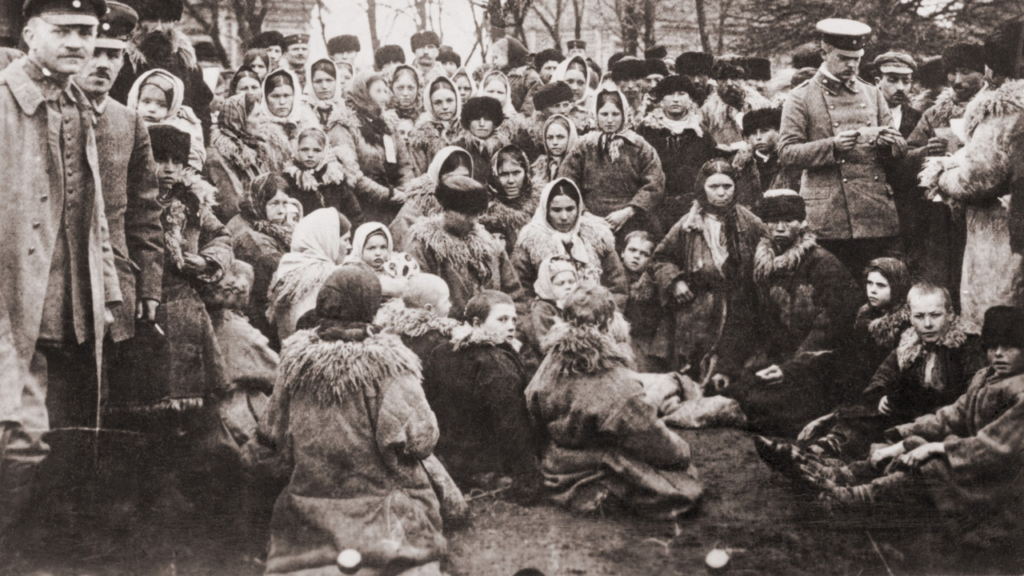
From 1948 to 1951, over 700,000 immigrants entered Israel, most were Holocaust survivors or Jews fleeing Arab lands. Ca. 1950.
“The Shoah Didn’t End”
One of the central themes of our discussion was the connection between October 7 and Jewish historical memory.
Halevi grew up in a family shaped by the Holocaust. His father survived World War II by hiding for six months in a ditch in the forests of Transylvania. Like many children of survivors, Halevi was raised with an acute awareness that Jewish security could never be taken for granted.
That history shaped how he understood the attacks of October 7.
“The Shoah didn’t end. It only changed.”
This idea appears throughout Halevi’s work. In Like Dreamers, he explores how the creation of Israel transformed Jewish history by giving Jews sovereignty and military power, while also revealing new moral, political, and existential challenges.
For many Israelis, October 7 shattered assumptions that had existed for decades. Israel’s military strength had created a sense that the existential vulnerability experienced by previous generations belonged to the past.
“What we’re really saying when we describe October 7 as the greatest number of Jews murdered since the Holocaust,” Halevi said, “is that the Holocaust didn’t end.”
His observation touches on a broader conversation among Holocaust scholars about the long-term impact of collective trauma. Historian Deborah Lipstadt, author of Antisemitism: Here and Now, has written extensively about how Holocaust memory continues to shape Jewish identity and perceptions of security in the modern world.
October 6 and October 8
When I asked Halevi how hopeful he felt about Israel’s future, he gave an answer that reflected both realism and optimism.
“In the short term, zero. In the middle term, eight to nine.”
He explained this by contrasting what he calls the “October 6 Israel” and the “October 8 Israel.”
Before the attacks, Israeli society appeared deeply fractured. Months of protests over judicial reform had exposed significant political and social divisions.
Yet in the immediate aftermath of October 7, those divisions temporarily gave way to an extraordinary wave of solidarity. Citizens organized food deliveries, transportation networks, housing for displaced families, support systems for reservists, and aid for hostage families.
“We instantly pivoted from the lowest place in our schism in the history of the state to one of the peak moments of our unity.”
For Halevi, that response revealed something essential about Israeli society. Despite profound disagreements, there remains a strong sense of collective responsibility that emerges during moments of crisis.
His optimism comes not from believing that political disagreements will disappear, but from witnessing how quickly Israelis mobilized to support one another when it mattered most.
The Cost of Trauma
Perhaps the most personal part of our conversation came when Halevi discussed empathy.
Throughout much of his career, he has advocated for greater understanding between Israelis and Palestinians. His book Letters to My Palestinian Neighbor was written as an attempt to explain the Jewish and Zionist narrative while remaining open to hearing the Palestinian story.
But he spoke candidly about how difficult that has become since October 7.
“October 7 sent us right back to our most primal and vulnerable place. I’m still there.”
Then he said something many public intellectuals might hesitate to admit.
“I feel my humanity is diminished. And my Jewishness is diminished.”
Rather than presenting himself as someone who has found easy answers, Halevi described the emotional and moral struggle that many Israelis continue to experience.
Research on trauma suggests this response is not unusual. Studies examining individuals exposed to war and political violence have found that trauma can affect people’s capacity for empathy, trust, and perspective-taking, particularly in the immediate aftermath of violence. At the same time, other research suggests that post-traumatic growth and renewed social solidarity can emerge over longer periods of recovery.²
Halevi’s honesty was striking because he did not attempt to resolve that tension. He simply acknowledged it.