Meditation, fear, compassion, and the stories that shape our world.
When the World Contracts, We Look for Voices That Stay Open
Two years ago, in the aftermath of October 7th, when the air in Israel felt thick with shock, fear and disorientation, I sat down to record the very first episode of RAW. My nervous system was still trembling, my children were asking questions I didn’t know how to answer, and the world felt suddenly unrecognizable. In that moment, I knew only one thing: I needed to speak with someone who could meet reality without collapsing into hatred or despair.
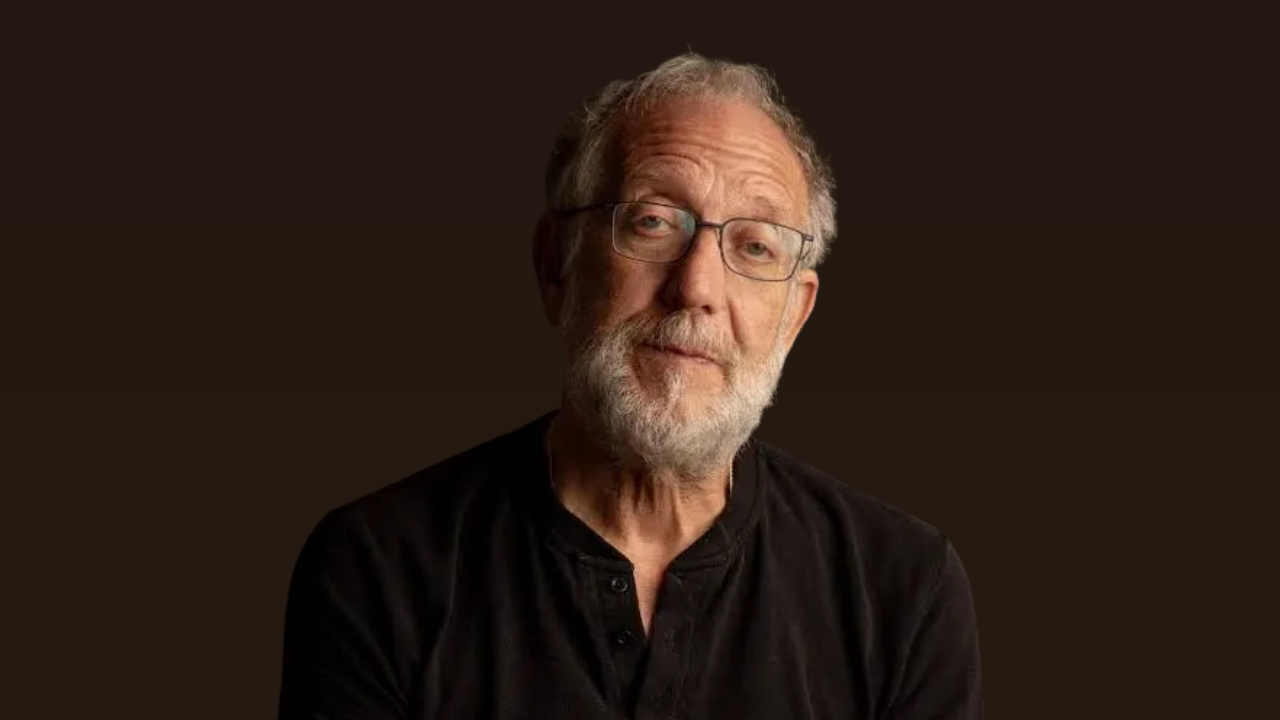
That someone was Dr. Stephen Fulder.
Now, nearly two years later—with a ceasefire in place, with some of our hostages home and others heartbreakingly not, with an atmosphere of exhaustion, confusion and unprocessed grief—Stephen returns to the podcast. And our conversation feels, if anything, even more essential.
Who Is Stephen Fulder?
For those unfamiliar with Stephen’s work, his presence in Israel’s spiritual landscape is hard to overstate. Born in London in 1946, he studied at Oxford and completed a PhD at the National Institute for Medical Research before spending nearly five decades exploring healing, alternative medicine, and the nature of the mind.
Since 1976 he has been a devoted practitioner of Buddhist dharma—drawing deeply from Theravada, Dzogchen and Advaita teachings. He has written fourteen books, taught thousands of students, and for the past twenty-five years has been one of the most active and influential meditation teachers in the country.
He is the founder and senior teacher of Tovana (the Israel Insight Meditation Society), which today offers more than 45 retreats a year and has made Buddhist practice widely accessible to Israelis of all backgrounds. He is also a co-founder of Clil and Mashiv Nefesh, an ecological spiritual community in the Galilee, where he grows his own food and medicines and continues his lifelong commitment to peace and ecological awareness.
Stephen’s teaching is grounded in simplicity, clarity and direct experience. Whether he’s guiding mindfulness practice or sitting in listening circles with Israelis and Palestinians, his work is always oriented toward liberation—not in some abstract spiritual sense, but as a lived, embodied possibility.
What Has Changed in the Past Two Years?
When I asked Stephen what had shifted for him since our first conversation, he paused. “I live very much in the moment,” he said, “but a few themes are clear.”
He spoke of the increasing contraction he sees in Israeli society—the rise of tribalism, fear, and what he calls “a mistaken view of security.” He spoke with equal tenderness about the suffering of Palestinians in Gaza, the Israeli soldiers returning psychologically wounded, and the unspeakable grief on all sides.
But he also spoke of his own life—teaching retreats, growing vegetables, tending chickens, meditating with his community—and of the happiness that continues to live alongside sorrow. “My life is good,” he said. “But the sadness has grown. It hasn’t gotten smaller.”
The Human Pull Toward Tribalism
One of the deepest themes we explored was the human tendency, in times of threat, to retreat into our in-group. To divide the world into “us” and “them.”
As I shared with him, this is something I’ve seen in myself and in many Israelis since October 7th. The feeling of being vilified, misunderstood, or abandoned can create a psychological contraction so deep that our higher capacities—curiosity, compassion, nuance—become almost inaccessible.
Stephen didn’t deny the reality of fear. “Fear is honest,” he said. “It needs space.” But the problem, he explained, is when fear becomes a worldview. When a temporary wave becomes a permanent narrative.
That is when we begin to build mental walls instead of opening the sky.

Meditation as a Way of Meeting Life
We spoke at length about what meditation is—and what it is not.
It is not shutting down thoughts.
It is not striving for calm.
It is not a spiritual gym for the strong-minded.
Meditation, Stephen said simply, is being available to life.
It is the intimacy of meeting our experience—pleasant or painful—without collapsing into it or fleeing from it.
He described it as “turning to everything,” echoing the Pete Seeger song inspired by Kohelet.
And we reflected on Rumi’s poem The Guest House: greeting each emotion as a visitor, without mistaking it for the whole of who we are.
Meditation creates space.
And in that space, our inner life becomes less like a storm and more like an ocean—capable of holding waves without being defined by them.

Compassion as a Form of Strength
Stephen spoke beautifully about compassion as a grounding force—not a softness or naiveté, but a form of integrity.
He reflected on the Dalai Lama’s insistence on maintaining compassion for the Chinese even after Tibet’s destruction. “If we lose compassion,” the Dalai Lama said, “we have lost everything.”
Stephen sees this as equally essential here.
If anger becomes our identity, we will build a future none of us want to live in.
Compassion is not the opposite of strength.
It is the expression of our deepest values.
Spiritual Activism: What Are We Fighting For?
At the end of the conversation, we talked about activism—not in the political sense, but in the spiritual one.
If we are going to struggle, Stephen asked, what values are we struggling for?
What kind of world are we trying to build?
What kind of human beings do we want to become?
You cannot fight for a world you are not willing to embody.
And so the work of the spiritual activist is not only external; it is profoundly internal. It is the work of staying awake, staying human, and staying rooted in compassion even when fear seduces us into narratives that shrink the heart.
Why This Conversation Matters
We live in a time when noise is constant, outrage is addictive, and distrust is widespread.
It is easy—almost inevitable—to be swept into contraction.
But this conversation with Stephen is a reminder that another way exists.
That the human heart can stay open even in impossible circumstances.
That meditation, listening, and compassion are not luxuries but survival tools.
And that nourishing the soul is not escapism—it is responsibility.
Listen to the Episode
You can listen to the full conversation on Apple, Spotify or Youtube.